


We Tested The Biggest Mini in History

The 2025 Mini Countryman JCW is the biggest Mini ever created. It’s almost poetic: a brand built on the idea of being tiny is now making something that you could almost rent out as an Airbnb. And yet, Mini insists the DNA is still there. The charm, the quirk, and the personality all scaled up. We wanted to find out if that claim holds true. So we lived with the JCW for a week, took it across New Zealand roads, launched it, poked it, prodded it, flicked all the toggles, and tried to figure out whether this still feels like a Mini.
Engine: 2.0L turbocharged inline-4
Power: 221 kW
Torque: 400 Nm
0–100 km/h: 5.4 seconds (claimed)
Transmission: 7-speed dual-clutch
Drive: All-wheel drive
Weight: ~1,600+ kg
Boot Space: 505 L
Fuel Economy: 8.3 L/100km (claimed)
Competes With: Audi Q3, Volkswagen T-Roc R, BMW X2 M35i, Mercedes GLA 35Price
Price: Starting at $79,990 NZD (November 2025)

STYLING — CHUNKY AND BRAVE
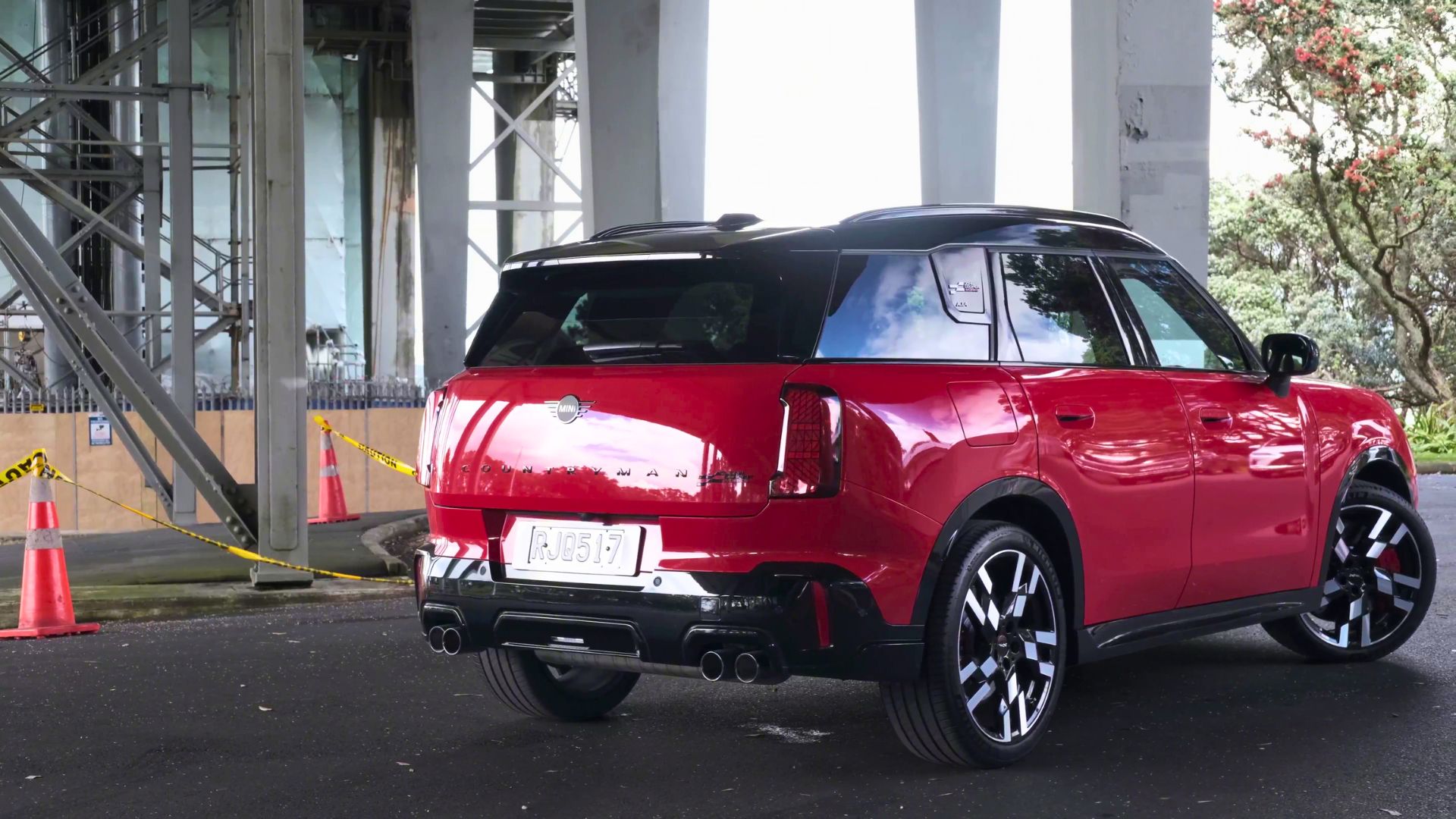
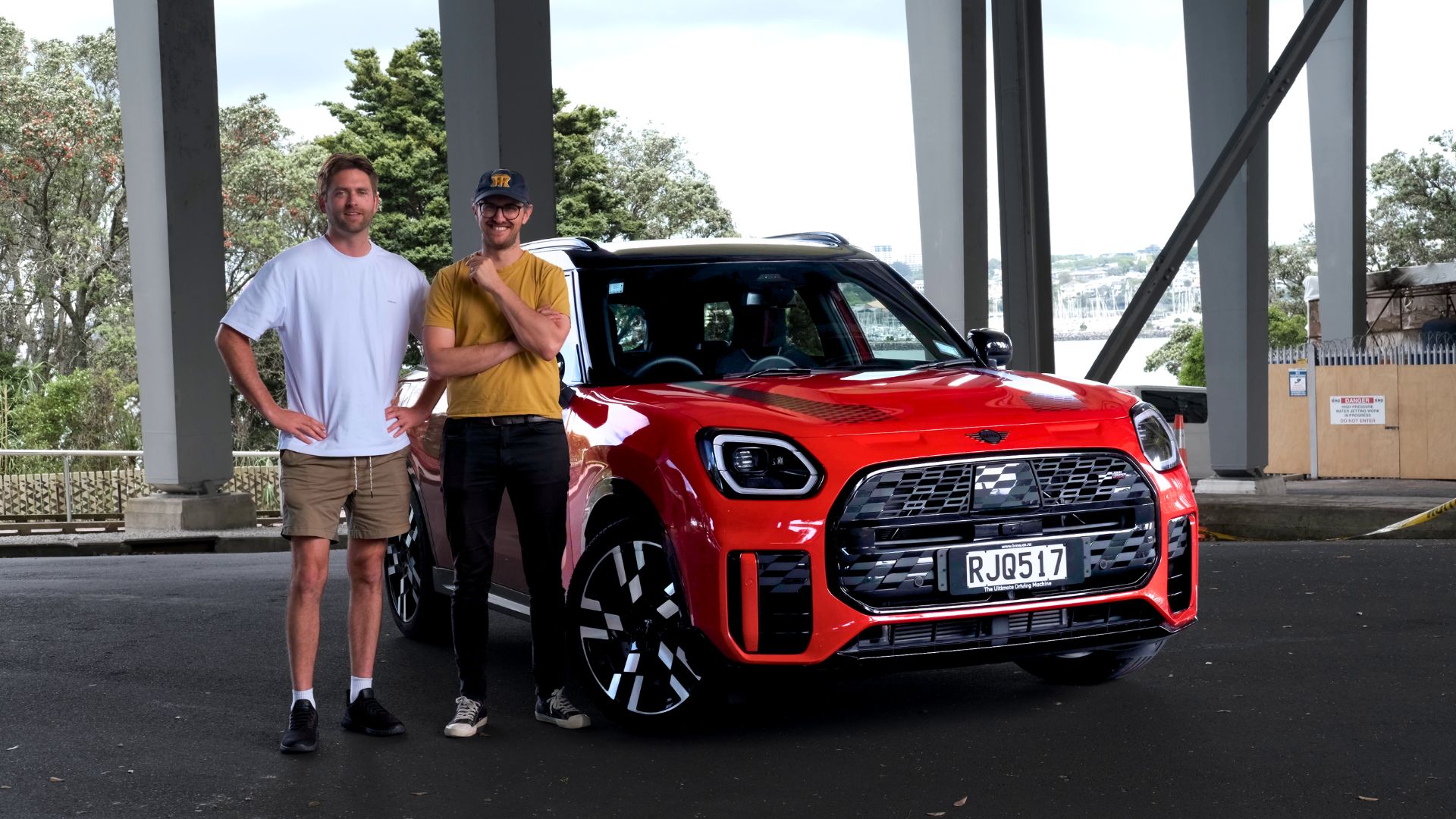
From the outside, the new Countryman looks like the Mini team were locked in a room with Minecraft for six months. The lines are blockier, the stance more upright, and the whole thing feels like an evolution toward “Mini SUV” rather than “Mini that ate another Mini.”
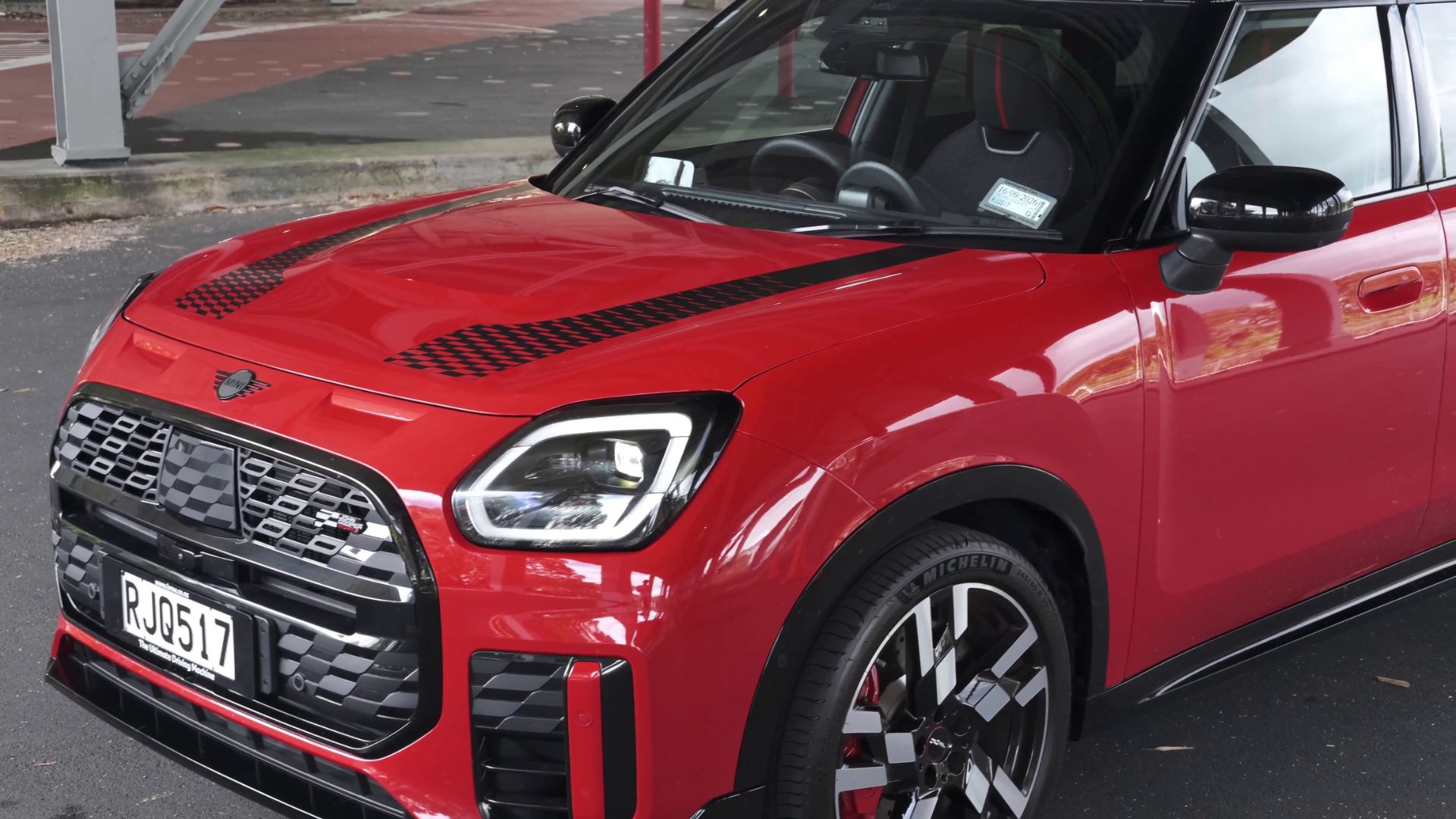
The rear three‑quarter angle is arguably the strongest view. From straight on, those squared‑off taillights and upright proportions work well. But as you walk toward the front, things get a bit spicier. The headlights are a strange combination of hexagonical, circular, and square. We call it the hexirclesquare. Still, it’s better than the last generation’s weird blob shape.
The JCW touches help: the bonnet decals, the slightly bulged hood, the badge at the front. Whether you love them or hate them, at least Mini is trying. This isn’t a generic, wind‑tunnel‑designed jellybean. It’s proudly, deliberately different.
INTERIOR — QUIRK MODE
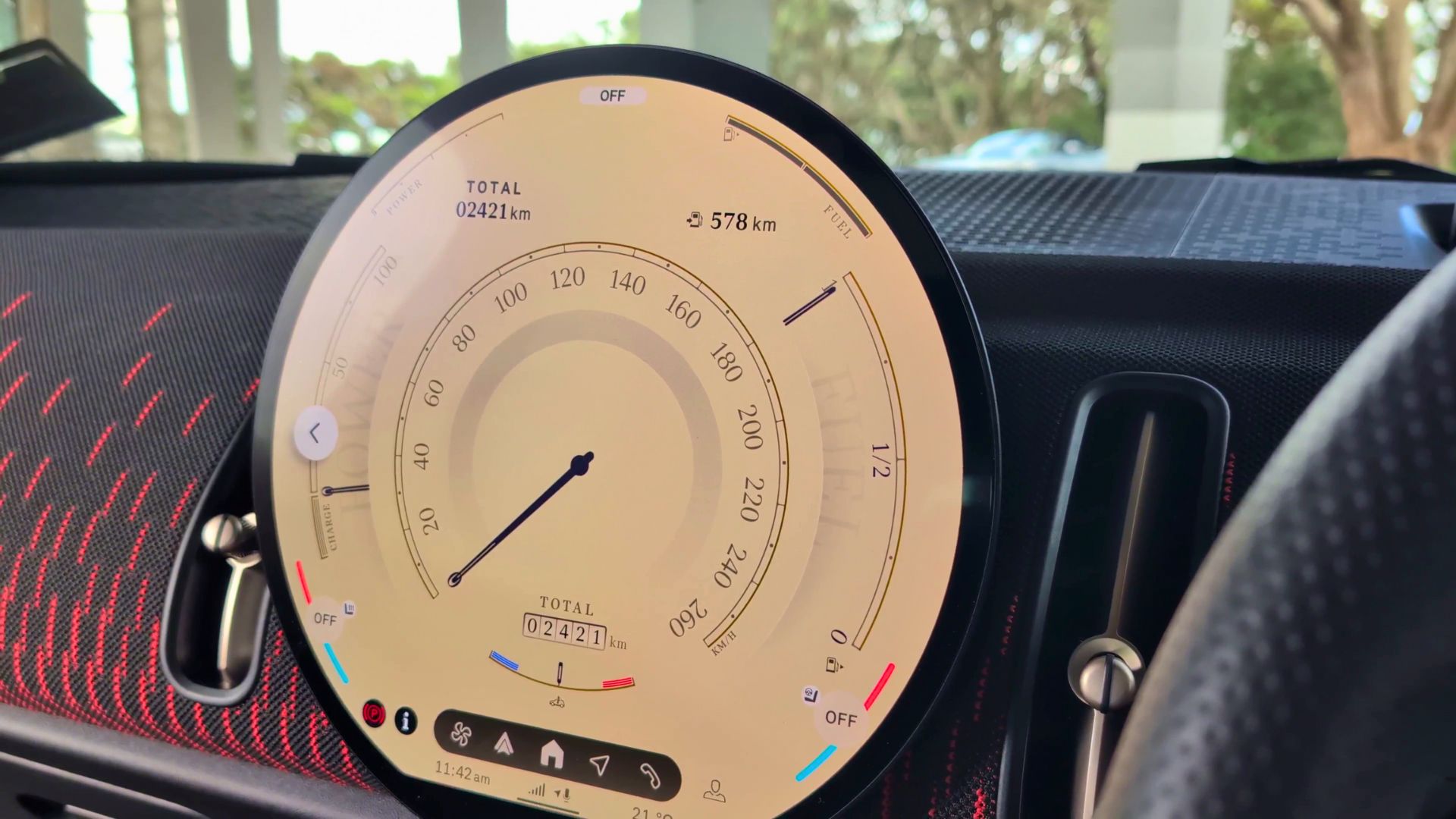
Step inside and you are immediately greeted by the giant circular OLED screen. It’s the centrepiece, the statement, the thing Mini hangs its entire interior identity on.
And honestly, it's brilliant.
The definition is razor‑sharp, the colours pop, and the whole UI has personality. But the cooler feature is the "Mini Experiences" - selectable modes that completely overhaul the theme of the thing. Fonts, colours, sounds, graphics… they all change.
It’s not just “red mode” or “blue mode” like most other manufacturers.
There’s a trade‑off, though: dealing with the climate controls is finicky, and all of the focus being spent here means less driving information in front of you. Instead, you get a tiny heads‑up display showing speed and… not much else.
Below the screen is a bank of toggles that look like they were stolen from an old aircraft. They’re delightful to use, tactile, and inject just a bit of mechanical joy.
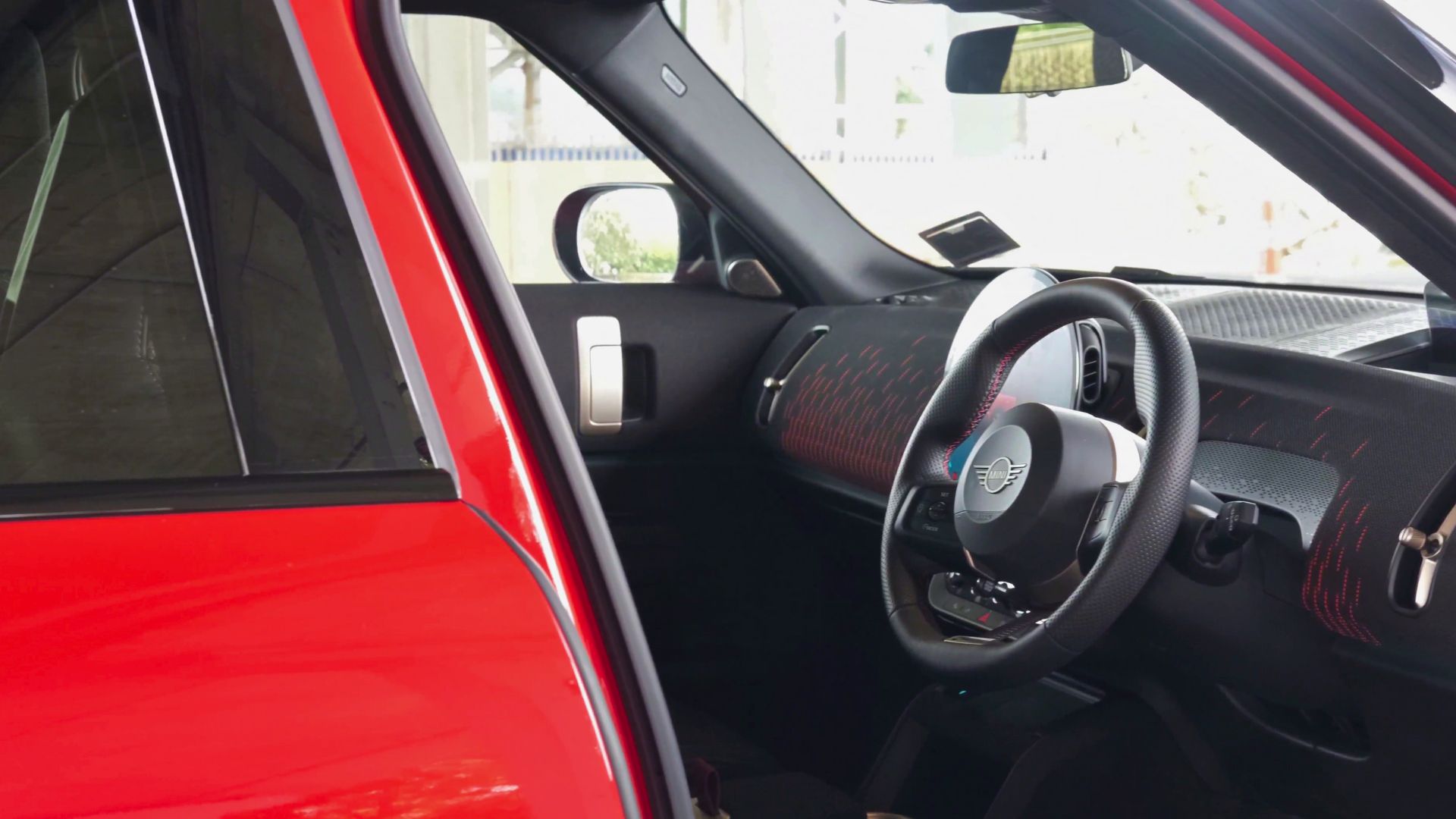
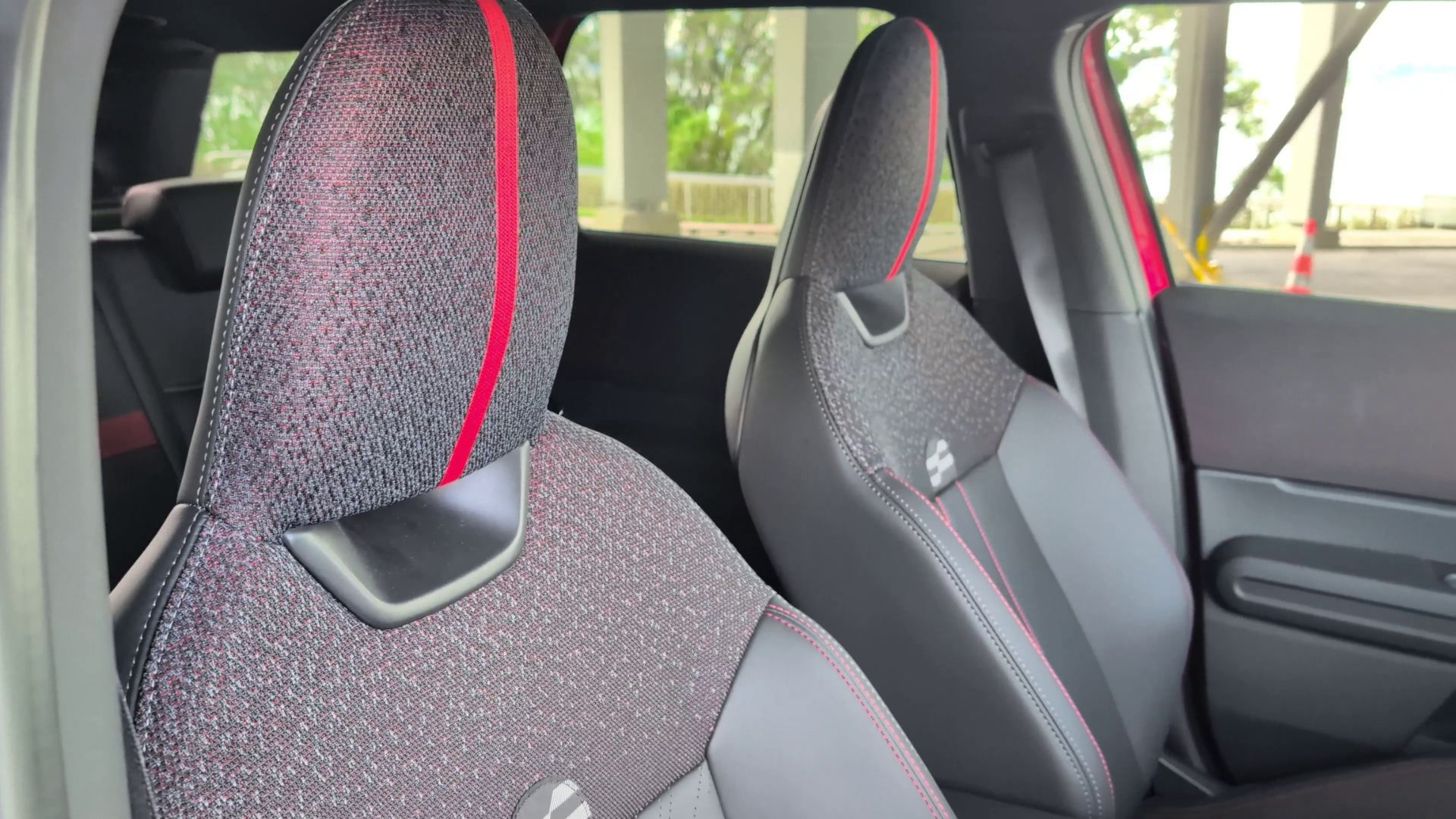
The fabric‑covered dash looks interesting, especially when the vertical “streaks” are illuminated at night… but it is quite visually busy and likely difficult to clean.
Then there’s the fabric straps - one on the center console and one on the steering wheel. Both are fantastic. Let’s just hope toddlers don’t see to them with a pair of scissors.
And finally there’s space - the whole reason the Countryman exists. Headroom is massive. Knee room is generous. The back seats fit normal humans comfortably. The boot is decent - not class‑leading, but perfectly acceptable.
DRIVING — ZIPPY AND FUN
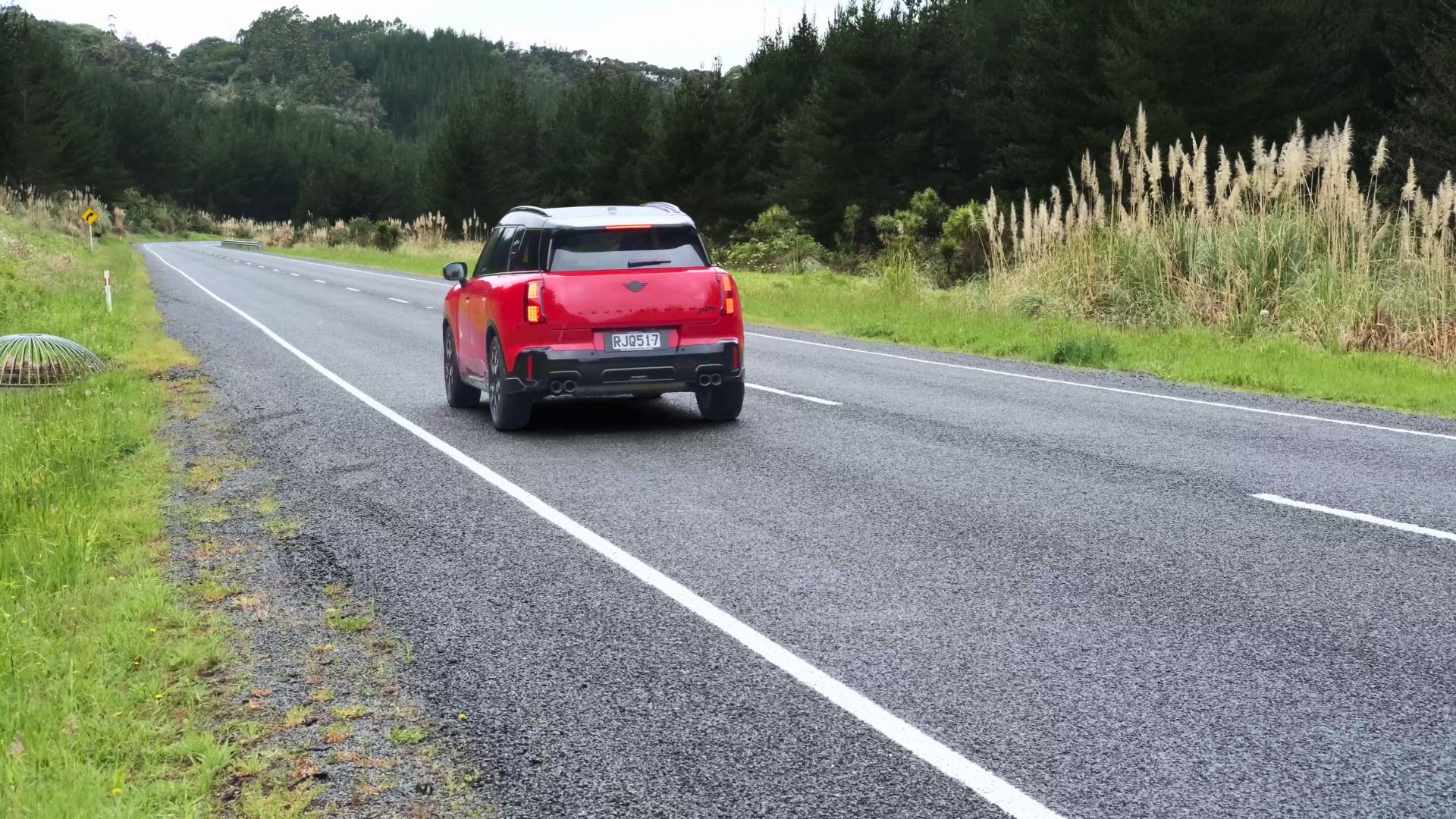
Despite the SUV proportions, the Countryman JCW still feels nimble.
The steering is noticeably quick and direct. Turn the wheel even slightly and the car reacts immediately, giving a surprising amount of agility for something with this mass.
Body roll is present but modest. Grip is solid thanks to the ALL4 system. And the whole thing feels smaller from behind the wheel than it looks from the outside.
The JCW version is the fastest Countryman you can buy. And while it’s not “rip your face off” fast, it’s definitely quick enough with ~300 hp and 400 nM. We clocked a 0–100 km/h run of 5.7 seconds, which matches Mini’s claim almost perfectly (that’s with 2 of us in the car).
It’s punchy, energetic, and eager, though not exactly ferocious. But for the intended buyer, that’s probably perfect.
We were a bit perplexed by the fully artificial exhaust note, despite the four tips hanging off the rear end. The synthetic “pop” sound and overrun went a smidge too far.
Does it ruin the experience? Not really. But enthusiasts will notice.

VERDICT — IS IT STILL A MINI?
If your definition of "Mini" is strictly about measurements, then no. That ship has sailed. Think Lamborghini Urus. It’s a sign of the times.
But if your definition is about character, charm, and the ability to brighten your day every time you get behind the wheel - then yes, this is absolutely still a Mini.
It’s fun to look at, fun to sit in, and fun to drive. Not stupid, grin‑inducing fun, but grown‑up fun. Positive‑energy fun. The kind of fun that makes your Monday morning commute feel 15% less grim.
And critically, it undercuts the German premium brands on price while offering something more distinctive.
The 2025 Countryman JCW is proof that personality still matters. And in a world of increasingly serious, screen‑dominated cars, Mini’s quirky approach might be exactly what keeps the brand relevant.

%20(24).jpg)