


They Put a GTI Engine in a 7-Seater? VW Tayron Review

There’s a moment that happens to a lot of people. Sometimes it’s when you buy a house. Sometimes it’s when your knees start making noises. And sometimes it's when you have a baby and your brain goes: Seven seats. Not as a suggestion. It's an internal command. Because you want space for prams, bags, bottles, and everything else. But ideally… seven seats without completely giving up the idea that driving can still be enjoyable. Does Volkswagen's newest entrant deliver?
- Engine: EA888 2.0L turbocharged inline-4
- Power: 260 hp (195 kW)
- Torque: 400 Nm0–100 km/h: ~6.6 sec (tested)
- Drive: AWD (4MOTION)
- Transmission: 7-speed DSG
- Weight: ~1,900 kg
- Seating: 3 rows, 7 seats
- Boot Space: ~345L (7 seats up) / ~850L (5 seats)
- NZ Price: From $96,990 NZD (R-Line) as of January 2026
- Competes With: Skoda Kodiaq RS, Mazda CX-80, Hyundai Santa Fe, Ford Everest 3.0

THE BIG QUESTION
On paper, the Tayron is up against some serious heavy hitters.
Skoda Kodiaq RS. Hyundai Santa Fe. Ford Everest. Mazda CX-80.
All broadly similar in size. All similarly powerful. All well equipped. Many of them cheaper.
Which immediately raises the question: what does the Tayron do differently?
Because the Tayron doesn’t come screaming into the segment with a wild design, a gimmick, or some radical tech flex. Instead, it takes the most Volkswagen approach possible.
It does everything competently. It has touch of premium luxury, and loads of daily practicality, wrapped in an overall package that's hard to ignore when cross-shopping.
And that might exactly be what you want, assuming you're willing to pay for it all.
STYLING - A WINNING COMBINATION
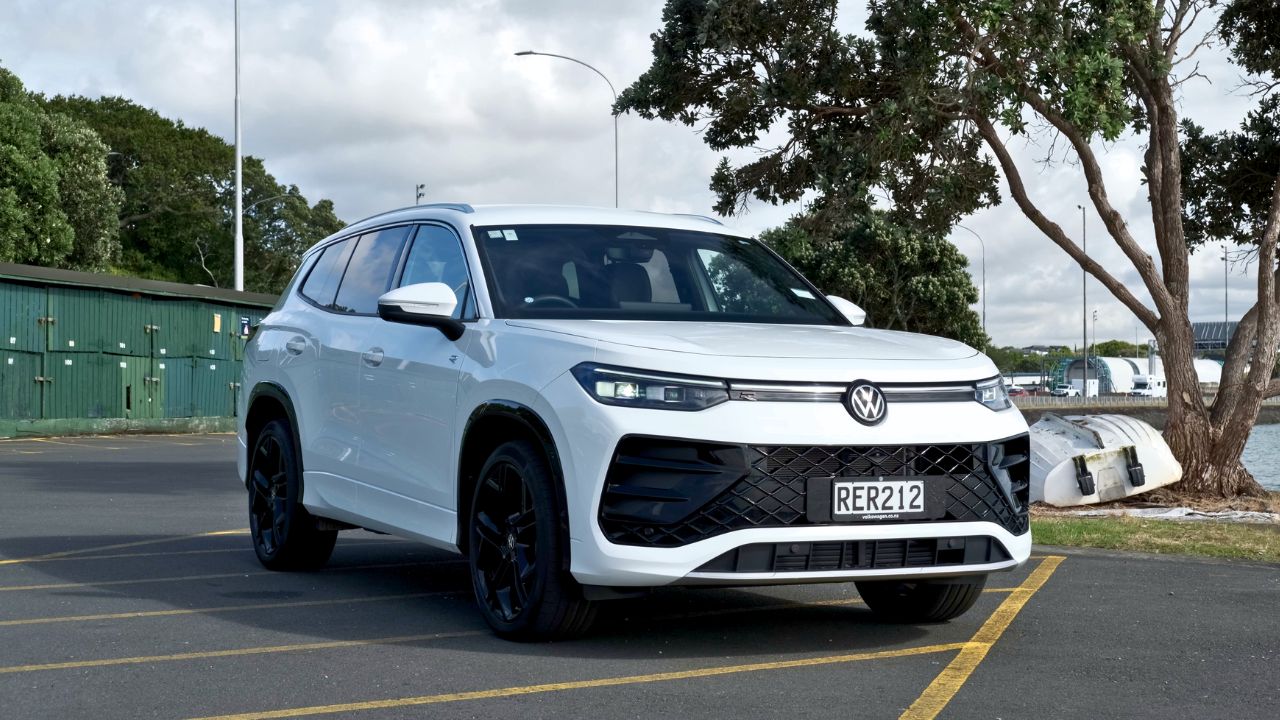
The design is conservative, clean, and safe. No controversial angles. No experimental elements. No “what were they thinking?” moments.
But ithe design is strong. In the same way the Golf is a pleasing mix of stylish, sporty, and sophisticated.
And that's exactly what VW needed from the Tayron. They have the I.D line to push the boat out further, but here in their bread and butter line-up, they've done well.
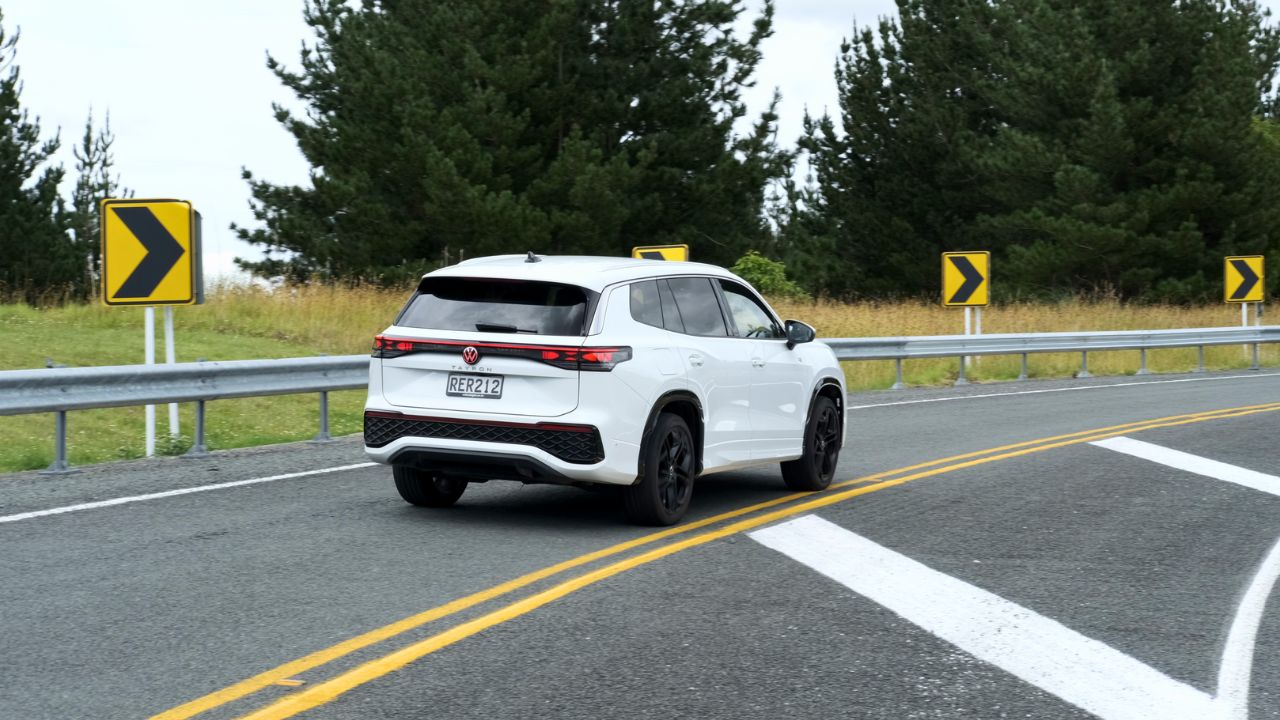
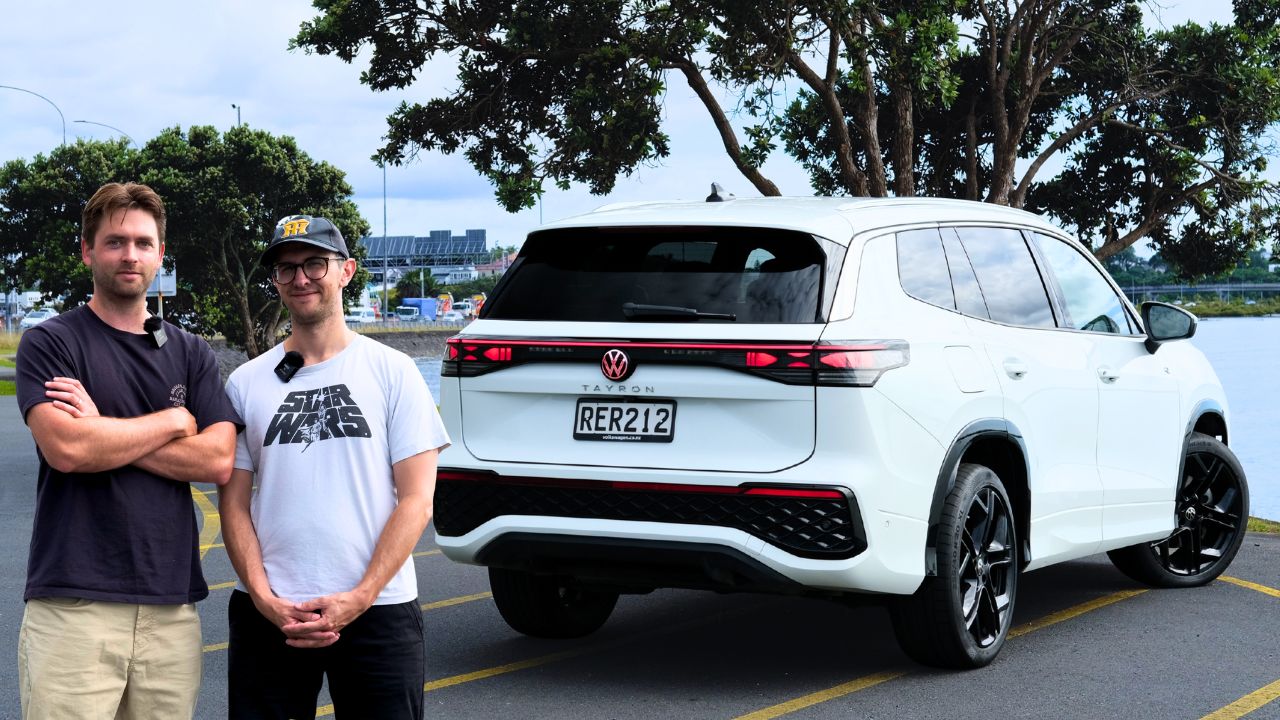
The rear carries the most presence, with the detailed light bar working well against the Tayron’s squared-off proportions.
From the side, a pronounced character line rises into the rear quarter, doing a good job of breaking up the length of what could otherwise look like a very large, very flat vehicle.
The front is the least flattering angle, leaning into upright, van-like proportions, though thankfully it never crosses into ugly - just don't expect it to turn heads.
.jpg)
INTERIOR – INOFFENSIVE, WELL FINISHED, AND MOSTLY SMART
Inside, the theme continues.
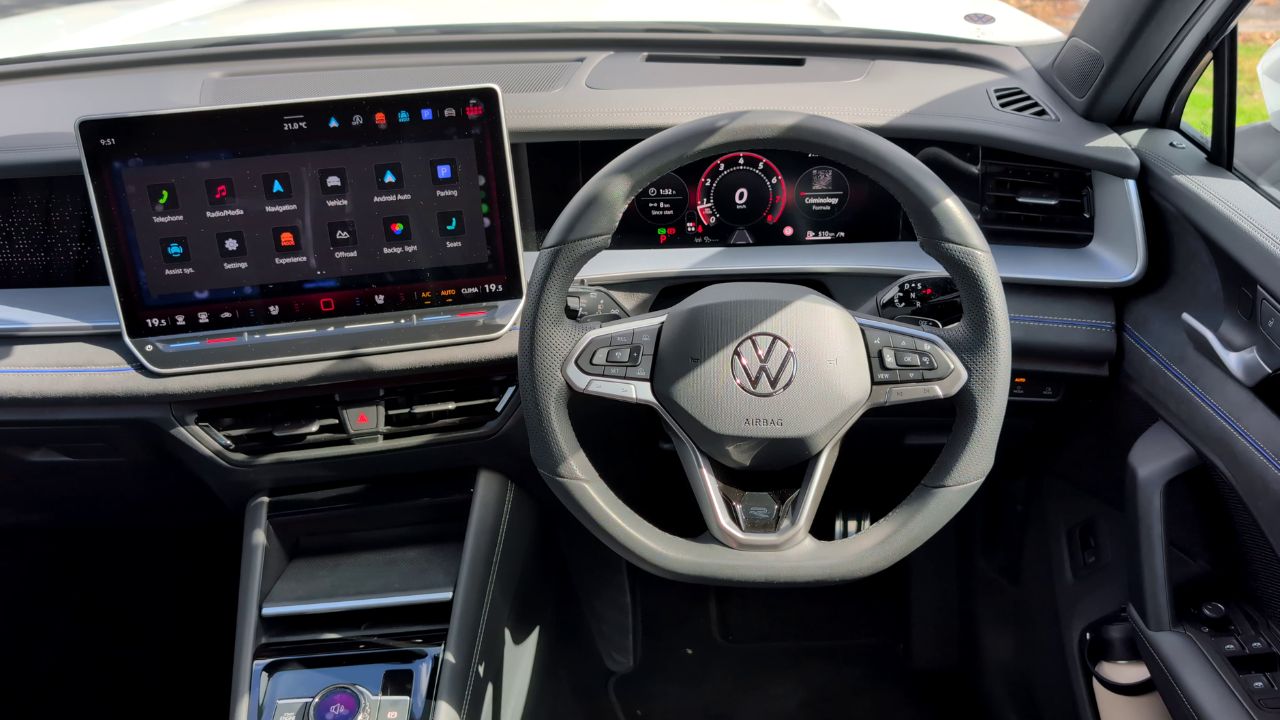
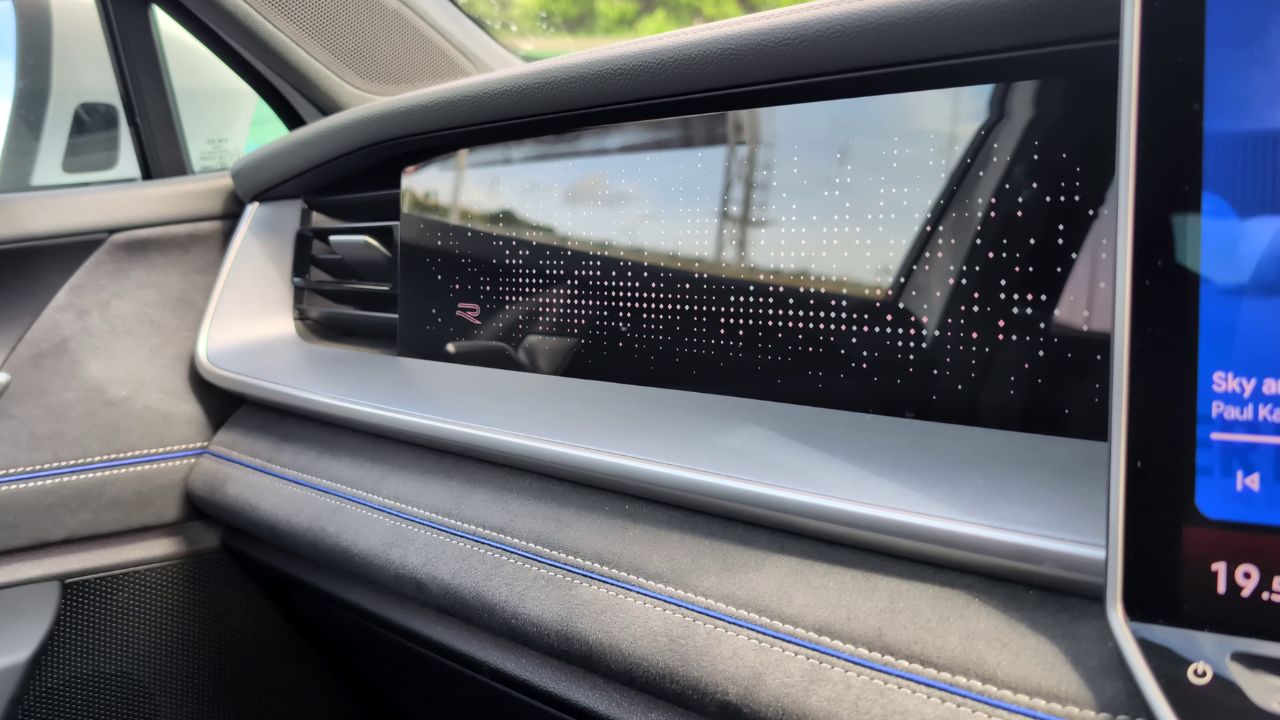
Everything feels solid. The material mix is interesting. Stitching is everywhere. Leather, Alcantara, brushed metallic accents — all nicely judged.
It doesn't feel super soft or premium, but it doesn't feel like you've been short-changed either - about right for this segment.
And the massaging front seats are genuinely excellent. A small luxury that makes a big difference in daily life — especially when sleep is… optional.
Crucially, proper steering wheel buttons make a welcome return. Credit where it’s due.
The infotainment screen is large but not fully integrated into the dash like the latest BMWs, Mercedes, or Audi’s new setups. Some people will complain. Others will breathe a sigh of relief.
Anecdotally, my wife liked it. It’s simple. It’s expected. It does what you want without turning the cabin into a cinema screen.
As usual, the touch-sensitive climate sliders are a sore point. Nobody likes them. Nobody asked for them. Yet here we are.
A highlight, though, is the clever rotary control with its own little display — volume, drive modes, and quick interaction in one place. It’s intuitive and genuinely satisfying to use.
The wireless phone charger is also excellent: your phone slots in securely, doesn’t slide around, and the little flap above it hides it.
The only real complaint here is that VW didn't bring some of the more interesting interior options to New Zealand - like the brown/tan leather seen in the North American Tiguan.
SPACE & PRACTICALITY – WHERE IT EARNS ITS KEEP
This is where the Tayron quietly shines. It does all of the things you would want or expect from a three-row 7-seater:
- Massive door bins (drink holders / mobile rubbish bins)
- Comfortable second row for adults
- Rear-facing baby seats without destroying front-seat legroom
- A usable third row (for small kids or shorter trips)
- Excellent visibility — thin A-pillars, big glass areas
- Easy to park thanks to cameras, despite the length
This is one of the closest cars we’ve tested recently to something we’d actually buy. And that’s saying something.
DRIVING – PEPPY, SMOOTH, AND VERY HONEST
Under the bonnet is a familiar setup: A Golf GTI-derived engine paired with a 7-speed dual-clutch transmission.
195 kW / 260 HP doesn’t sound outrageous, but remember — this thing weighs just over 1.9 tonnes.
We recorded a 0–100 km/h time of 6.6 seconds, and honestly that feels about right. It’s not trying to be fast-fast. The initial take-off is softened by weight and inertia, but once it’s rolling and in the power band, it moves confidently.
Get it in the power band and you can generate amount of thrust.
Overtaking is easy. Merging is stress-free. You’re never left wishing for more shove.
More importantly, the drivetrain is nicely tuned.
No jerky low-speed behaviour. No awkward shifts. Just smooth, predictable progress — exactly what you want in a family SUV.
Same goes for the comfort. Suspension is soft and compliant, but you will feel the body rolling in sharp corners
Which means it doesn’t feel particularly playful, edgy, or special behind the wheel.
And that’s fine — because it was never meant to.
This isn’t a car about thrills. It’s about safety, reliability, efficiency, and getting everyone from A to B without drama. The R-Line’s extra power matters, but not because it turns the Tayron into a hot SUV — rather because it gives you confident acceleration that passes for a bit of fun on occasion.
VERDICT – A VERY GOOD ANSWER TO A VERY BORING QUESTION
If you want the boldest design, the most personality, or the best value headline — this might not be your pick.
But if you want a seven-seat family SUV that feels refined, smooth, safe, powerful, well finished, and quietly competent at everything it’s asked to do… the Tayron R-Line makes a compelling case.
It’s more expensive than some obvious alternatives. And yes, you are paying a premium for the Volkswagen badge.
But as a package, this is hard to beat at the moment.
%20(19).jpg)

%20(9).jpg)